Learn the goals and benefits of the Vermont BRT project.
Vermont Transit Corridor
Bringing faster, more reliable bus service to Vermont Avenue, LA County’s busiest bus corridor.
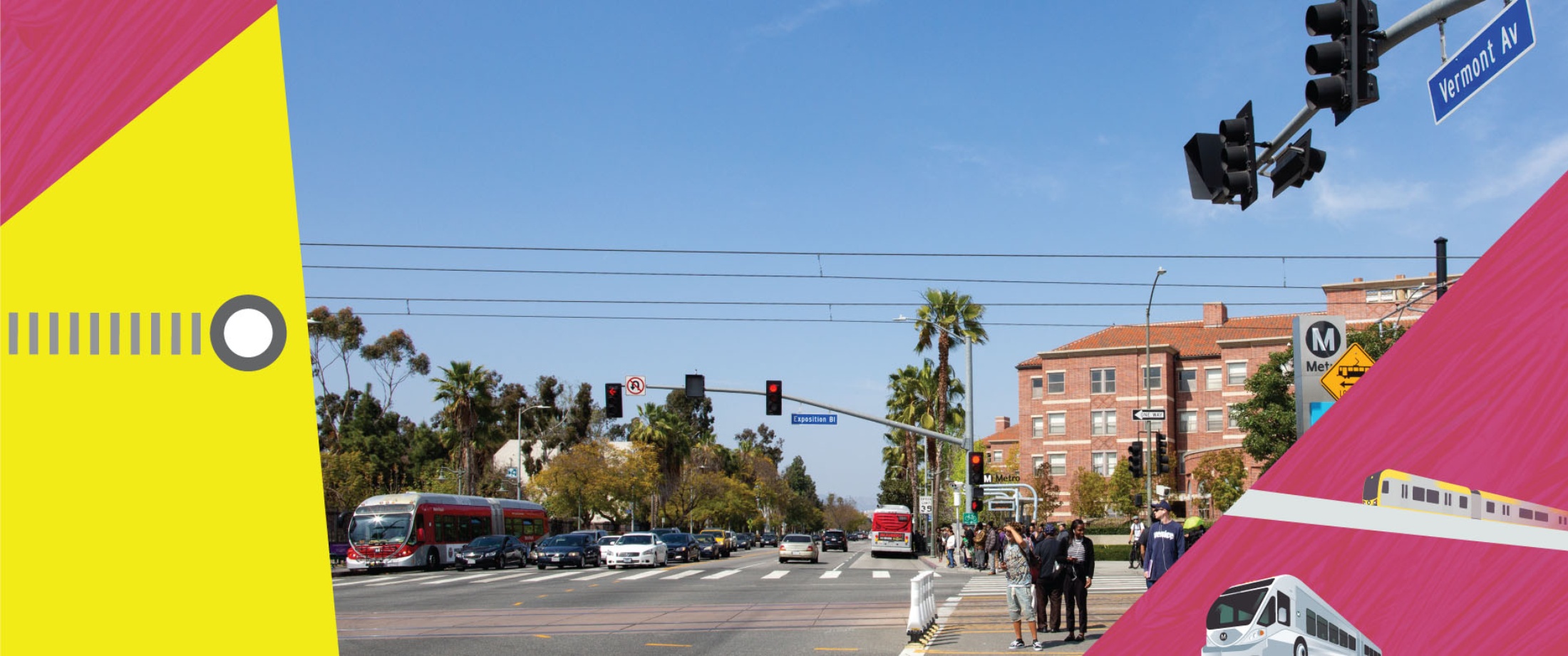
Metro is planning a 12.4-mile Bus Rapid Transit (BRT) line along Vermont Avenue, from Sunset Boulevard to 120th Street. The project will improve speed, reliability, and access for over 36,000 daily riders, connecting diverse communities to jobs, schools, and regional transit.
Planning and Community Insights
Engage
See Community Voices
Find out how community engagement helps shape design outcomes.
Take Action
Review Findings
See the results of the equity assessment, displacement study, and business case evaluation.
Events
No Events Found
Frequently Asked Questions
A planned Bus Rapid Transit (BRT) system to provide faster, more reliable service along Vermont Avenue, serving over 36,000 riders daily.
A high-quality bus service with dedicated lanes, enhanced stations, frequent service, and faster boarding—offering a rail-like experience.
From Sunset Boulevard to 120th Street, using side-running lanes and connecting to Metro B, C, D, and E Lines and over 20 bus lines.
Metro approved the Locally Preferred Alternative in March 2025 and is beginning NEPA review and preliminary engineering.
Rail remains a long-term option, with environmental review expected as early as 2026, contingent on funding.
Get Involved
Help shape this project for good. We want to hear from you:
Got questions or ideas? Our project team is here to listen.
Our team is here to support your questions and help you understand what this work means for your community. We welcome your questions and ideas as we explore early concepts and community priorities.
Channels are monitored to make sure you receive timely support.
Receive our project emails!
Register to receive detailed updates and essential information about our projects directly to your inbox. Stay informed and engaged as we progress, ensuring you have all the latest developments and key insights at your fingertips.
Timeline
1990
Voters pass Proposition C, establishing a countywide half-cent sales tax to support transit improvements, laying the groundwork for future corridor investments.
1993-1996
Opening of Metro’s Red Line (now B and D Lines), including Vermont Avenue stations such as Wilshire/Vermont and Vermont/Santa Monica.
2013
Metro completes a countywide Bus Rapid Transit (BRT) study, identifying Vermont Avenue as a top candidate corridor due to high ridership levels (over 45,000 daily boardings).
2015-2017
Metro completes technical studies and initial planning for bus and rail options along the corridor.
2016
Measure M is approved by voters. It includes funding for the Vermont Transit Corridor, prioritizing BRT implementation by 2028 and allocating rail conversion funding after 2067.
2019
Metro releases the Vermont Transit Corridor Rail Conversion Feasibility Study. The study outlines possible heavy and light rail alternatives but identifies BRT as the near-term mode due to cost and timeline considerations.
2022
- Short-term (quick-build improvements)
- Mid-term (dedicated BRT by 2028)
- Long-term (rail conversion after 2067)
2024
Metro Board approves near-term improvements, including bus-only lanes in two segments of Vermont in late May 2024, and construction of these near-term improvements began in March 2025.
2025
In March 2025, the Metro Board of Directors approved the SB922 California Environmental Quality Act (CEQA) exemption and adopted the Locally Preferred Alternative (LPA): a 12.4-mile side running BRT with 26 stations at 13 major intersections.
2028
BRT infrastructure construction begins in late 2026/early 2027, with the goal of opening service by the 2028 Summer Olympic/Paralympic games.
2067
Measure M rail conversion funding becomes available, allowing Metro to initiate the rail mode transition.