North Hollywood to Pasadena Bus Rapid Transit
Connecting the Valleys with fast, reliable zero-emissions bus service in dedicated lanes
Metro’s North Hollywood to Pasadena Bus Rapid Transit (BRT) project will connect North Hollywood, Burbank, Glendale, Eagle Rock, and Pasadena with faster, more reliable bus service. Zero-emission electric buses will operate in dedicated lanes, offer all-door boarding, and serve passengers at enhanced stations, while improving travel times, reducing greenhouse gas emissions, and expanding regional transit access. The project offers a sustainable east-west connection to jobs, schools, and services across both valleys. Environmental review was completed and certified by the Metro Board of Directors in 2022. Pre-construction activities are currently underway to prepare the roadways for construction.
Community Engagement
Explore the BRT Corridor
Learn how BRT will connect communities and improve travel in the Valleys.
Get the Latest Updates
View highlights from the July 2025 design update meeting, which detailed 60% design progress.
Attend a Community Meeting
Join an upcoming meeting to hear design updates and learn how construction may impact your area.
Discover the BRT’s Path to Progress
Explore how the BRT’s journey took shape through community outreach, a collaborative effort powered by public input to shape a more connected, reliable transit future.
Access the Project Documents Here
Click on the link below to access the project documents.
Business and Community Support
About the Project
The North Hollywood to Pasadena Bus Rapid Transit (BRT) Project will create a fast, reliable bus line connecting the San Fernando and San Gabriel Valleys. Spanning 19 miles along with 22 enhanced stations, the project will improve travel times, accessibility, and connections to major destinations, offering a sustainable transit option for thousands of daily riders.
Active Work Notices
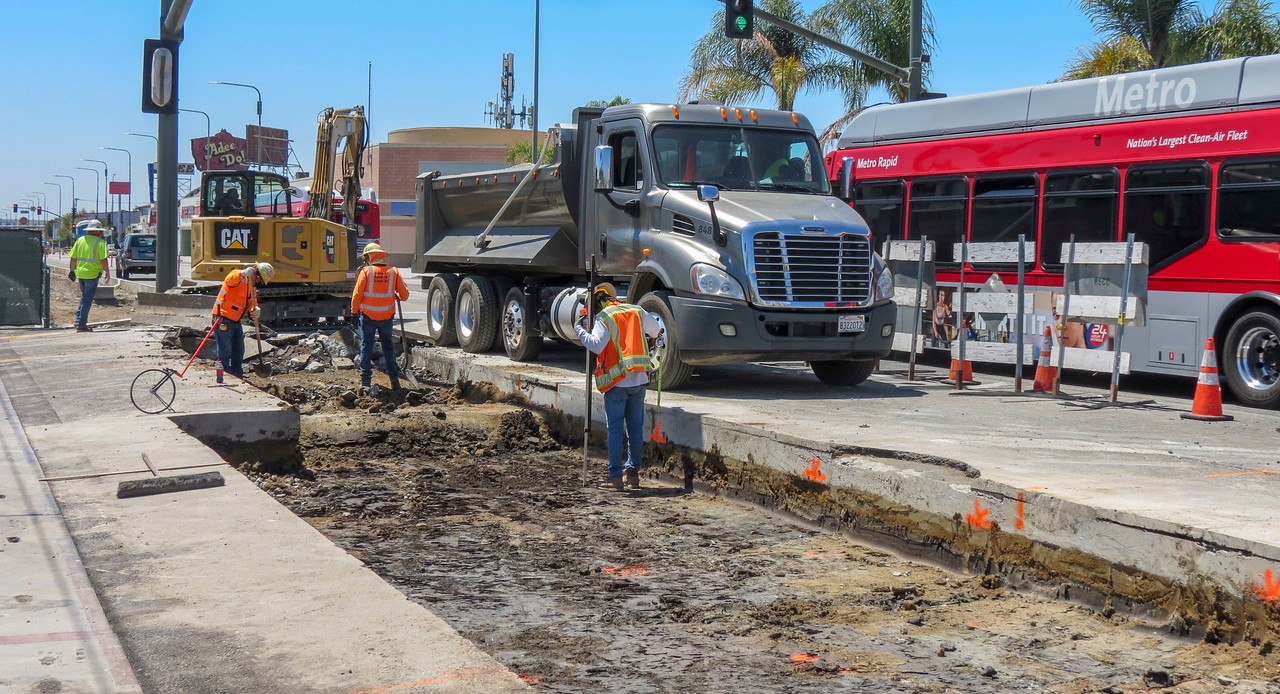
Metro is conducting utility exploration along key segments of the corridor. Crews are potholing roadways to identify underground utilities and confirm existing conditions in preparation for future construction. This work may involve temporary lane reductions, turn restrictions, and pedestrian adjustments. These activities help reduce unexpected delays during future construction and keep the project on schedule. Review the active work notices for full details.

Eat Shop Play
Eat Shop Play is a mitigation program designed to support and provide marketing to local businesses as Metro expands public transportation in Los Angeles. Through a revitalized program, Eat Shop Play has evolved into a growing community for small business owners, local residents, and visitors alike to connect, learn, and expand their businesses and build more resilient neighborhoods.
First/Last Mile
Metro has a plan to make it easier to get around LA by improving pedestrian and wheeled access to key stations along the planned BRT route. These improvements will help connect riders across both valleys and improve access to jobs, schools, and other key destinations. In May 2025, the Metro Board adopted the First/Last Mile (FLM) Plan for the BRT.
Metro Art
Metro Art brings transit to life through innovative, award-winning visual and performing arts that connect people, neighborhoods, and destinations throughout LA County. Opportunities to participate in art installations across each of the BRT’s 22 stations will be incorporated to enhance the experience for riders. A call to artists is expected to begin in 2026.
Events
No Events Found
Frequently Asked Questions
Pre-construction utility surveys began summer 2025. Full construction activities are expected in early 2026. Communities will receive advance notice before work begins. Expected completion is late 2027.
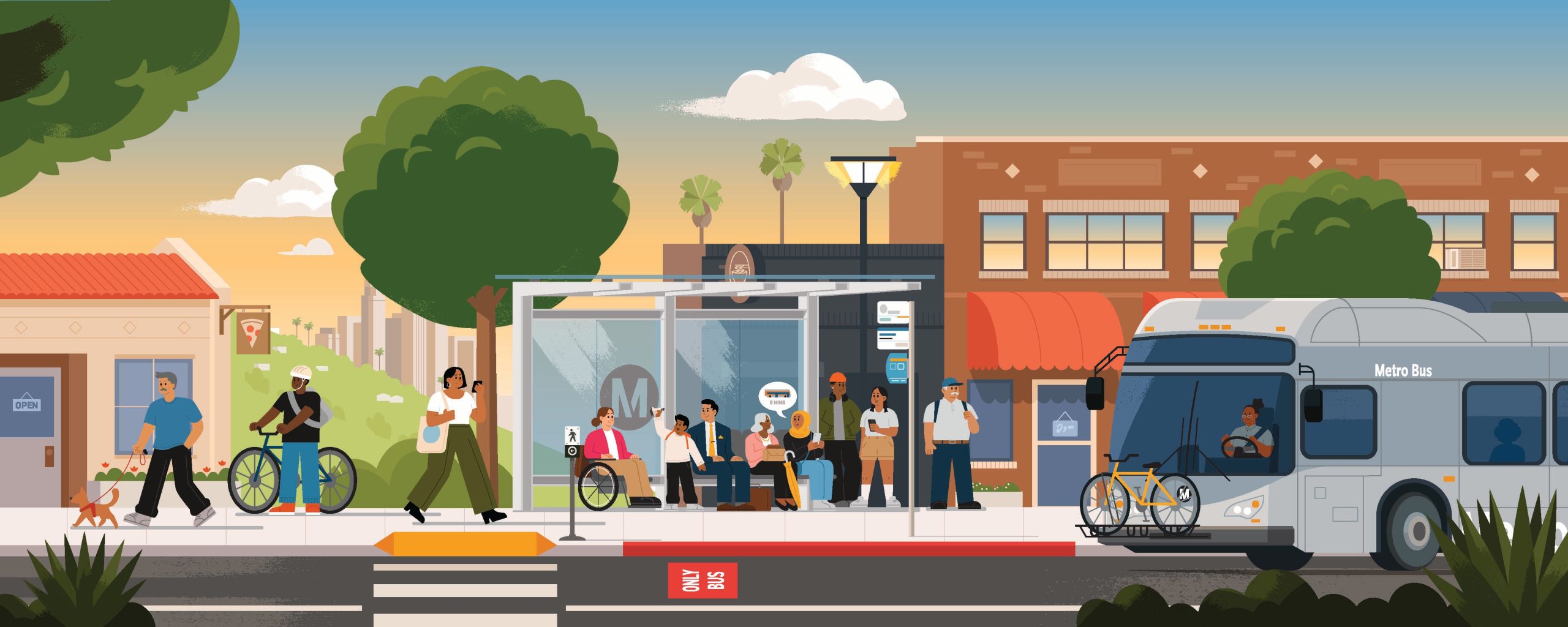
In addition to zero-emission electric buses, the BRT will include run in dedicated lanes, include all-door boarding, transit signal priority, and serve passengers with enhanced bus stations that include seating, shaded canopies, and real time bus arrival information.
Through community input, technical studies, and environmental review. Approved by Metro’s Board in April 2022 after several rounds of public engagement between 2019-2022.
Emergency vehicle access will be maintained during construction and allowed in dedicated BRT lanes when necessary during construction and after project completion.
Some trees will need to be removed to accommodate BRT infrastructure. Metro is committed to replacing them—often at a 2:1 ratio—and adding sustainable landscaping.
Impacts vary by segment. Metro is working with cities to balance transit efficiency, safety, and parking needs.
The majority of the BRT route includes dedicated bus lanes that run either in the center/median or side of the roadway. The BRT configuration map can be found in the latest presentation.
Get Involved
Help shape this project for good. We want to hear from you:
Got questions or ideas? Our project team is here to listen.
By connecting with us, you bring valuable insights to the table, helping create a Metro that truly reflects LA’s unique spirit.
Sign up for Project Updates
Register to receive detailed updates and essential information about our projects directly to your inbox. Stay informed and engaged as we progress, ensuring you have all the latest developments and key insights at your fingertips.
Timeline
Funding Secured via Measure M
Voters approved Measure M, which allocated funding to advance the NoHo–Pasadena corridor, aiming to connect Metro’s B/G (Red/Orange) and A (Gold) Lines to expand high quality transit between the San Fernando and San Gabriel Valleys.
Initial Studies & Planning
Metro completed technical studies and preliminary planning to identify transit needs, refine bus options, operations, and alignments along the corridor. This included ridership forecasts, geotechnical work, and early route modeling.
Alternatives Analysis
The project entered an Alternatives Analysis phase to evaluate multiple alignment and routing options. These alternatives would then feed into the Draft Environmental Impact Report analysis. Alternatives Report
Project Introduction & Draft EIR Launch
The project was publicly introduced, and Metro initiated the Draft EIR process—assessing route alternatives connecting the North Hollywood Station to Pasadena City College, with public outreach and feedback through a series of scoping meetings.
Draft EIR Released
The Draft EIR was published for public review and comment. Stakeholders, community members, and agencies attended Public Hearings and had the opportunity to evaluate environmental impacts and propose modifications.
Project Approval by Metro Board
Metro’s Board approved the project, including the selection of a predominantly street-running alignment with dedicated bus lanes and other BRT features (signal priority, all door boarding, and unique station design). Final Environmental Impact Report
Design Phase
Project design is being advanced following board approval. Engineering, civil design, station layout, transit operations planning, and coordination with utilities and local agencies is currently taking place. View the latest presentation from July 2025.
Utility Exploration Begins
In summer 2025, pre-construction work began with potholing activities that located underground utilities, verified conditions, and prepared roadways for later construction phases.
Construction & Operations Launch
Full BRT infrastructure construction begins in early 2026, continuing through late 2027, with the goal of opening revenue service in time for the 2028 Summer Olympics/Paralympics.