Home > Projects & Programs > Freeway Service Patrol - #399


Freeway Service Patrol - #399


Overview

Free Help for Stranded Freeway Motorists!

Freeway Service PatrolWhether it's a flat tire, an empty gas tank, or an overheated radiator, chances are that one day, you'll need help on the freeway. Thanks to the Freeway Service Patrol, help is on the way!

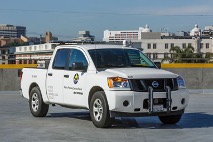
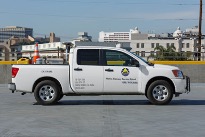
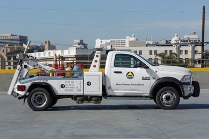
The Metro Freeway Service Patrol (FSP) is an elite team of tow truck drivers patrolling freeways all over Los Angeles County to provide help to stranded motorists and remove traffic accidents to keep traffic going. This service is absolutely free of charge.

This program funded by Proposition C, passed in 1990 to fund transportation improvements and reduce traffic congestion.

The FSP tow trucks reduce traffic congestion by efficiently getting disabled cars running again or by quickly removing those cars from the freeway. FSP also greatly reduces the chances of further incidents caused by onlookers and impatient drivers. In addition, FSP helps save fuel and reduce air polluting emissions by reducing stop-and-go traffic.

The ultimate benefit of Metro Freeway Service Patrol is that the safety of the motorist is not compromised while the efficiency of our freeway infrastructure is maximized.


Dial #399

Just dial #399 for motorist aid.

Dial #399 from your cellphone to:

  • Request Metro Freeway Service Patrol tow service
  • Report freeway road hazards
  • Contact your auto club
  • Report freeway damage or needed repair

The #399 service is:

  • Fully-staffed by English and Spanish speaking operators
  • Available to provide translation assistance in over 150 languages and equipped to serve the deaf, hearing and speech impaired
  • Always open – accessible 24 hours a day, seven days a week by cellphone

Remember, #399 does not replace 911. Use 911 if you need medical, fire department or law enforcement response. But for all non-emergency freeway assistance, dial #399.


About FSP

Operates 145 tow trucks on 400+ miles of Los Angeles County freeways to assist disabled motorists and to reduce traffic congestion

  • Operates 7 days a week primarily during daylight hours
  • Jointly managed by Metro, CHP and Caltrans
  • Funded by state highway funds and by Proposition C, the voter approved 1/2 cent Los Angeles County sales tax
  • Started as one of the first programs of its kind in the United States
  • Since its inception in July 1991 and has assisted almost 4 million motorists
  • It is the largest program of its kind and one of 13 major metropolitan programs in California

The Goal...

Throughout Los Angeles County, your public dollars are hard at work supporting the operation of the largest fleet of tow and service trucks (145) in the country. Known as the Los Angeles County Metro Freeway Service Patrol (FSP), FSP contracts private tow operators to patrol designated portions of freeways (beats) during the morning and afternoon commute hours. Their goal is to quickly repair or remove disabled vehicles to relieve freeway congestion. Each beat is approximately ten miles in length and contains three to five trucks that continuously patrol a freeway route.

The Partners...

The Freeway Service Patrol is a jointly managed program involving Metro (Metro), California Highway Patrol (CHP) and the California Department of Transportation (Caltrans). It is funded through the local Prop C - 25% sales tax and state highway funds.

The History...

The FSP Program was started in LA County in July 1991. More than 4 million motorists have been assisted since its inception (see graph). There are 13 FSP programs located in major metropolitan areas throughout California.

The Service…

Over 70% of assisted motorists wait less than 5 minutes during FSP hours before an FSP truck arrives to provide assistance. In four out of five assists, FSP drivers are able to repair the problem at the scene within 10 minutes of arriving. FSP drivers will change a flat tire, fill a radiator, tape a leaky hose, provide a jump-start, provide a gallon of gas, or when necessary, tow the vehicle to a safe drop location off the freeway.

The Benefits...

According to a 2004 survey conducted by UC Berkeley, the Los Angeles County FSP program has an average cost/benefit ratio of more than 8 to 1. This means that for every $1 spent on FSP, there is a $8 savings to the motorist.

The Cost...

The FSP service is FREE to motorists. FSP drivers are not allowed to receive any payment from motorists for freeway assistance.

The Hours...

The FSP operates on every freeway in Los Angeles County. The typical hours of operation are Monday - Friday 6 a.m. to 7 p.m. on weekdays and 10 a.m. to 6:30 p.m. on weekends.


Services We Provide

Free Metro FSP Services include:

  • Changing flat tires
  • Jump-starting cars
  • Refilling radiators and taping leaky hoses
  • Putting a gallon of fuel in gas tanks
  • If the FSP cannot get the car running within ten minutes, it will tow the car, absolutely free of charge to a safe drop location off the freeway.

Where the FSP Trucks patrol:

FSP trucks operate on over 400 miles of LA County freeways.

*Service levels (number of trucks) varies by day of week/time of day.

How to use this free service:

FSP patrols the freeways looking for stranded motorists during the specified service times. FSP drivers also receive information from CHP regarding 911 or call box callers requesting assistance. Chances are, if someone is stranded on a freeway, FSP will know about it within a few minutes and will respond as soon as possible.

You can also dial #399 from your cellphone to obtain assistance during normal FSP service hours.

The Metro FSP will not:

  • Recommend a private mechanic
  • Accept any payment or tips for assistance
  • Tow a car to a private repair service or residence
  • Tow motorcycles or heavy vehicles and trucks
  • Assist vehicles which have been in accidents unless directed by CHP, but will report any accidents immediately to CHP

To request a copy of the Freeway Service Patrol brochure or to get general program information, call 213.922.2957. This is not a road service phone number. Use call boxes on freeways or dial #399 on your cellphone for non-emergency roadside assistance. Call 911 for ‘emergency’ assistance.