Vermont Transit Corridor

The Vermont Transit Corridor Bus Rapid Transit (BRT) project is a 12.4-mile end-to-end side running BRT service from Sunset Blvd to 120th Street. Bringing faster, more reliable bus service to Vermont Avenue, LA County’s busiest bus corridor.
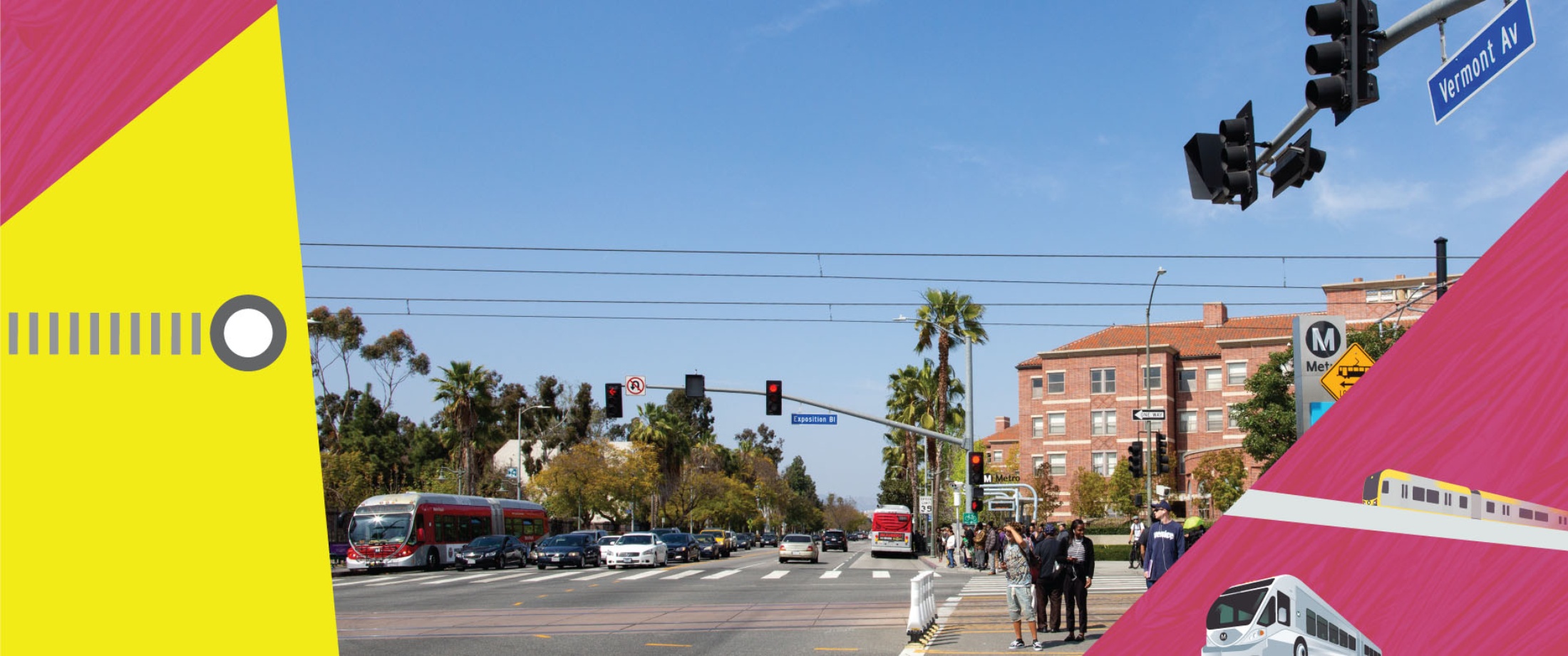
Intersection in Vermont Transit Corridor area.
Project Type
Bus
Current Phase
Design
Estimated Project Completion
2028
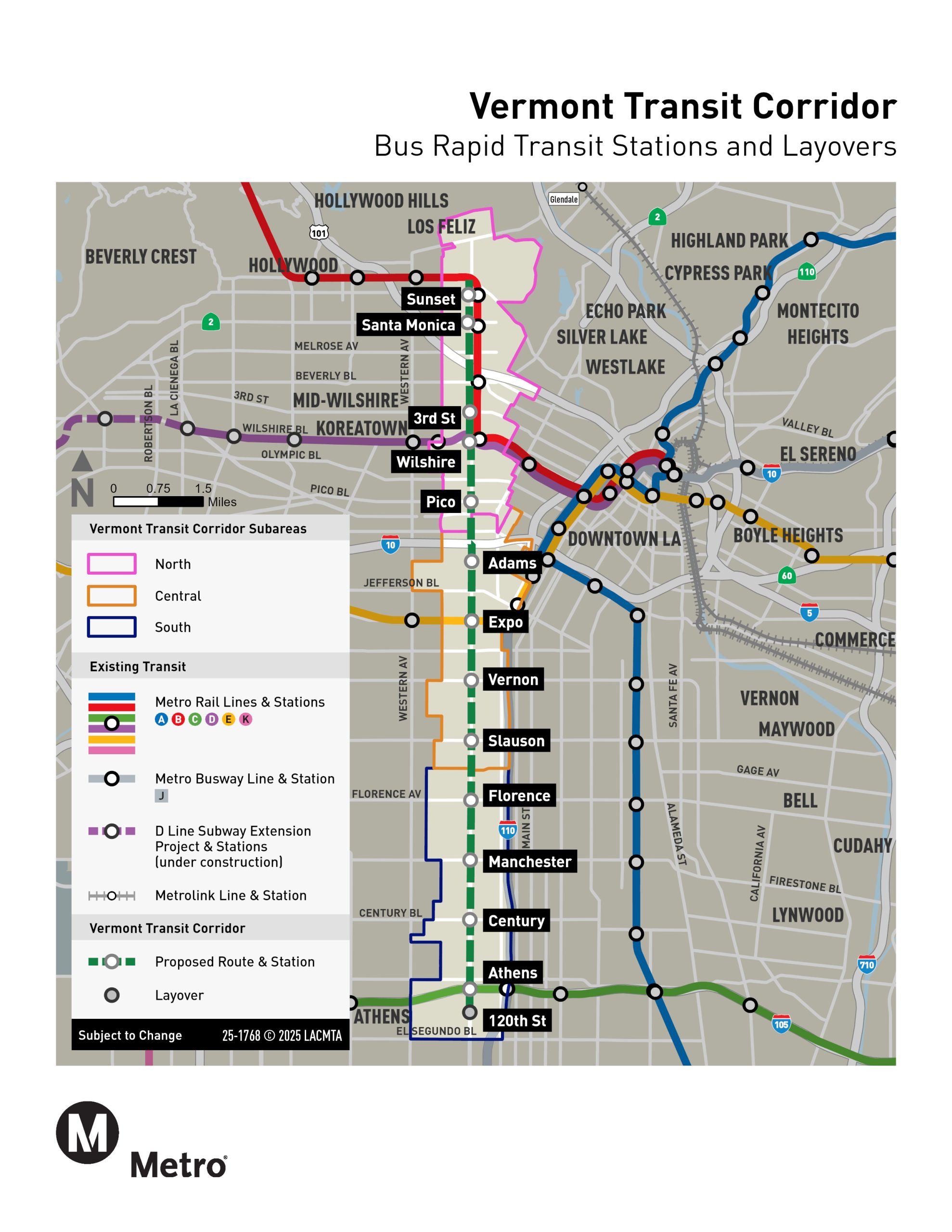
Vermont Transit Corridor Project Map

Metro is planning a 12.4-mile Bus Rapid Transit(BRT)line along Vermont Avenue, from Sunset Boulevard to 120th Street. The project will improve speed, reliability, andaccess for over 38,000 daily riders, connecting the MetroB/DLines,ELineandCLine, as well as various east-west bus lines, to many key activity centers, including educational, cultural, medical, governmental, and faith-based institutions. 

Vermont Transit Corridor Project Map

Status Update

Over the past year, Metro has achieved several key milestones for the Vermont Transit Corridor BRT Project. On March 28, 2025, Metro’s Board approved the CEQA SB 922 environmental document and selected the 12.4-mile side-running BRT alternative as the locally preferred alternative. The Project subsequently received a National Environmental Policy Act Categorical Exclusion determination, completing federal environmental clearance. In addition, the project reached the 30 percent Preliminary Engineering design milestone on December 1, 2025, and Metro awarded the Construction Manager/General Contractor contract February 2026, advancing the project toward final design and construction.  

Metro is currently progressing final design activities in close coordination with key stakeholders, including the City and County of Los Angeles, Caltrans, the California Public Utilities Commission, and utility providers. Metro is also pursuing Federal Transit Administration Small Starts funding and continues to engage with the public through participation in community events and outreach efforts. These ongoing activities support project development, interagency coordination, and preparation for future construction. 

Planning and Community Insights

Learn

See What’s Being Considered

 Learn the goals and benefits of the Vermont BRT project. 

Engage

See Community Voices

Find out how community engagement helps shape design outcomes. 

Take Action

Review Findings

See the results of the equity assessment, displacement study, and business case evaluation. 

Plan Ahead

Work Notices

Review active work and construction notices. 

Events

No Events Found

Timeline

2013

Metro completes a countywide Bus Rapid Transit (BRT) study, identifying Vermont Avenue as a top candidate corridor due to high ridership levels (over 45,000 daily boardings).

2015-2017

Metro completes technical studies and initial planning for bus and rail options along the corridor.

2016

Measure M is approved by voters. It includes funding for the Vermont Transit Corridor, prioritizing BRT implementation by 2028 and allocating rail conversion funding after 2067.

2019

Metro releases the Vermont Transit Corridor Rail Conversion Feasibility Study. The study outlines possible heavy and light rail alternatives but identifies BRT as the near-term mode due to cost and timeline considerations.

2022

Metro Board adopts a three-phase strategy for the corridor:
    • Short-term (quick-build improvements)
    • Mid-term (dedicated BRT by 2028)
    • Long-term (rail conversion after 2067)

2024

Metro Board approves near-term improvements, including bus-only lanes in two segments of Vermont in late May 2024, and construction of these near-term improvements began in March 2025.

2025

In March 2025, the Metro Board of Directors approved the SB922 California Environmental Quality Act (CEQA) exemption and adopted the Locally Preferred Alternative (LPA): a 12.4-mile side running BRT with 26 stations at 13 major intersections.

2028

BRT infrastructure construction begins in late 2026/early 2027, with the goal of opening service by the 2028 Summer Olympic/Paralympic games.

2067

Measure M rail conversion funding becomes available, allowing Metro to initiate the rail mode transition.

Documents

Folder
Name
Type
Name of the document if it’s long
Description of folder if the description is too long then it will
1.25GB
Download

Frequently Asked Questions

What is the Vermont Transit Corridor?

A planned Bus Rapid Transit (BRT) system to provide faster, more reliable service along Vermont Avenue, serving over 38,000 riders daily. The Project would also offer a vital north-south alternative to residents and businesses west of Interstate 110 (I110), Harbor Freeway.

What is Bus Rapid Transit?

A high-quality bus service with dedicated lanes, enhanced stations with ADA elements  frequent service, and all-door boarding—offering a rail-like experience.

What route will the Vermont BRT take?

12.4 miles of all-day dedicated side-running bus lanes from Sunset Boulevard to 120th Street, connecting the MetroB/DLines,ELine andCLine, as well as various east-west bus lines. 

Will Vermont ever have rail?

Rail remains a long-term option, with environmental review expected as early as 2026, contingent on funding.

What is the current status of the Vermont Transit corridor

The project is now advancing final design in coordination with local, state, and utility partners.  

Get Involved

Help shape this project for good. We want to hear from you:
Got questions or ideas? Our project team is here to listen.

Got questions or ideas? Our project team is here to listen.

Our team is here to support your questions and help you understand what this work means for your community. We welcome your questions and ideas as we explore early concepts and community priorities.

Channels are monitored to make sure you receive timely support.

Receive our project emails!

Receive our project emails!

Register to receive detailed updates and essential information about our projects directly to your inbox. Stay informed and engaged as we progress, ensuring you have all the latest developments and key insights at your fingertips.

Metro and our transit partners will be running direct service to the World Cup from multiple locations. Parking reservations are now available.

Scroll to Top