

The FLM project portfolio is comprised of plans for new transit projects, plans for existing stations and other external projects that support the FLM goals.
Metro Active Transport (MAT) Projects
Measure M establishes the Metro Active Transport and First/Last Mile (MAT) Program, Metro’s ongoing active transportation infrastructure funding program. The main objective of the MAT program is to encourage increased use of active modes of transportation and enhance safety for pedestrians and bicyclists. The MAT program proceeds in a 5-year cycle, and currently funds both FLM projects and Active Transportation Corridor projects.
First/Last Mile Plans
The FLM team leads the development of FLM plans for new transit projects and for existing stations. FLM plan development involves technical analysis and collaboration with communities and local agency partners. FLM plans to establish project lists of comprehensive station access and safety improvements. FLM plans and the project lists they contain, prompt further collaboration to fund and implement improvements.
Metro’s First/Last Mile & Mobility Hubs Games Kit of Parts
To support the transit-first 2028 Olympics and Paralympic Games, Metro is developing the First/Last Mile & Mobility Hubs Games Kit of Parts to facilitate venue access and deploy temporary mobility hubs to support multimodal connections. The Kit of Parts is a toolkit of modular, flexible materials for implementing quick-build walk-and-wheel pathways, temporary mobility hubs, and activating open streets to support transit-to-venue connections.
The toolkit is an inventory of durable, quick-build materials, allowing Metro and venue city partners flexibility in implementation and enabling the materials to remain in the public right-of-way for extended periods. Elements of the toolkit include flexible delineators, planters, signage, modular shade structures, bus stop enhancements, seating, etc., for various street typologies and hubs.
Metro is leading Phase I, which includes planning, city coordination, toolkit development and 60%-level design for select Games venue locations. Phase II is anticipated to be led by venue cities and will include final design, procurement, fabrication and implementation. Metro anticipates completing Phase I by fall 2026 and kicking off Phase II immediately thereafter.
Metro’s Phase I deliverables will provide resources that any city, including non-venue cities, can use. Deliverables will include an inventory of materials, conceptual guidance, specifications and standard designs, and a procurement strategy.
2026 Mega-Event Playbook
To support mega-events in Summer 2026, Metro developed the 2026 First/Last Mile & Mobility Hubs Temporary & Quick Build Toolkit. The toolkit provides a curated inventory of materials to support multimodal safety and temporary and quick-build placemaking, shade, accessibility, user comfort, wayfinding, traffic and crowd control. These elements are intended to strengthen multimodal transportation connectivity, improve First/Last Mile access, enhance safety and elevate the overall Open Streets event experience.
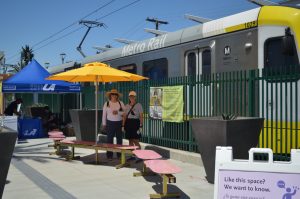
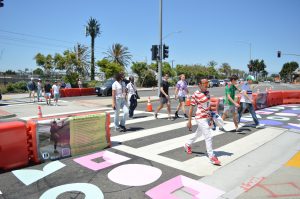
Together with agency and community partners, Metro tested the Kit of Parts toolkit on June 12th at the Downtown Inglewood K-Line Station. The pilot project included enhanced station plaza seating, innovative shade, and crossing improvements that make walking to transit safer, more comfortable and more enjoyable. The pilot was a real-world test of how Metro can partner to reimagine streets and public spaces ahead of the 2028 Games, creating places where people can walk, bike and take transit.
Street Safety Program
The FLM team leads the implementation of the Metro Street Safety, Data Sharing, and Collaboration Policy which was adopted by the Metro Board of Directors in June 2022.
Transit to Parks
Metro envisions a Los Angeles in which people can use a network of varied and connected transportation options to get to their neighborhood parks, regional open space destinations, and other recreational spaces.
For more information, please visit: https://transit2parks-lametro.hub.arcgis.com/
