Division 20 Portal Widening & Turnback Facility

Clearing the way for faster, more reliable subway trips from Union Station.
Project Type
Rail
Current Phase
Construction
Estimated Project Completion
2026

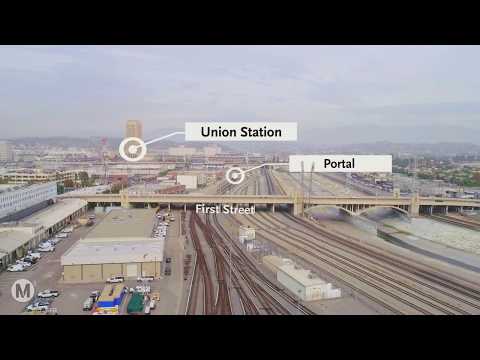
Metro is making key improvements at the Division 20 Rail Yard, located just south of Union Station near the Arts District, to support faster and more frequent subway service. The Division 20 Portal Widening & Turnback Facility Project adds new tracksand expands train storage and turnaround capabilities for the B and D Lines.  

These upgrades will reduce delays and allow more trains to run during peak hours,which is especially important as ridership grows with the opening of the D Line Extension to the Westside.  

Work includes widening the portal tunnel entrance, reconfiguring existing tracks, adding new turnaround facilities and modifying portions of the yard toenablemore efficient operations. Additional elements include new power substations, updates to the 1st Street Bridge and on-siteimprovements like lighting, landscaping and cultural resource mitigation. 

The project directly supports future service expansions and helps Metro meet growing demand with more reliable, high-capacity subway service.  

Documents

Folder
Name
Type
Name of the document if it’s long
Description of folder if the description is too long then it will
1.25GB
Download
What is the difference between heavy rail and light rail? 

Metro’s operates both heavy rail and light rail, but they differ in several key ways:  

  • Heavy rail(suchasthe B and D Lines) runs entirely underground or in exclusive rights-of-way, uses high-capacity trains powered by a third rail, and does not share space with cars or pedestrians.  
  • Light rail(suchasthe A, E and K Lines) may run at street level or in medians, uses overhead power lines, and has more frequent crossings and smaller trains.  

This project improves Metro’s heavy rail subway system,including how trains turn around and store near Union Station,to enable more frequent service.  

How does this project relate to the Link Union Station (Link US) project? 

The Division 20 project supports Link Union Station by enhancing how trains enter, exit and turn around at Union Station. While Link Union Stationadds new tracks and run-through service, Division 20 ensures Metros subway fleet can move efficiently through the area. Together, they modernize Union Station and increase reliability across the broader transit network. 

What measures are in place to minimize construction impacts? 

Metro is using a range of strategies to reduce disruptions, including noise and vibration monitoring, dust control and scheduling work during less disruptive hours. Construction workers are prohibited from using street parking and laydown areas are located within the rail yard to avoid interfering withnearbytraffic. Community updates are shared regularly.

What street improvements are part of this project? 

The project includes streetscape upgrades along Center Street, including new landscaping, lighting and trees. These improvements are designed to soften the rail yard’s perimeter andcreate a pleasantexperiencefor pedestriansnear the Arts District. Metro has also upgraded the existing bike lanes with fresh striping to improve visibility and safety foreveryone.

What is cultural resource mitigation, and how is it part of this project? 

Cultural resource mitigation is the process of identifying, documenting, and where possible, preserving historic structures or sites affected by construction. For this project, Metro is stabilizing a portion of the Citizens Warehouse building and documenting its historical significance. Similar efforts are underway for the National Ice and Cold Storage facility and portions of the 1st Street Bridge, with public documentation and interpretive materials to follow.

Get Involved

Got questions or ideas? Our team is here to listen.

Got questions or ideas? Our team is here to listen.

Our team is here to support your questions and help you understand what this work means for your community. We’re here to support you with construction-related questions, including access, timing, and nearby impacts.

Channels are monitored to make sure you receive timely support.


Scroll to Top