

Transit Oriented Communities
Metro has a plan for a better LA. Our unprecedented transportation investment is an opportunity to reshape how people move and live in LA County, and sow the seeds for a more equitable, sustainable region. We are looking beyond the footprint of Metro stations and bus stops to think holistically about the design and function of neighborhoods, with a goal to realize transit-oriented communities.
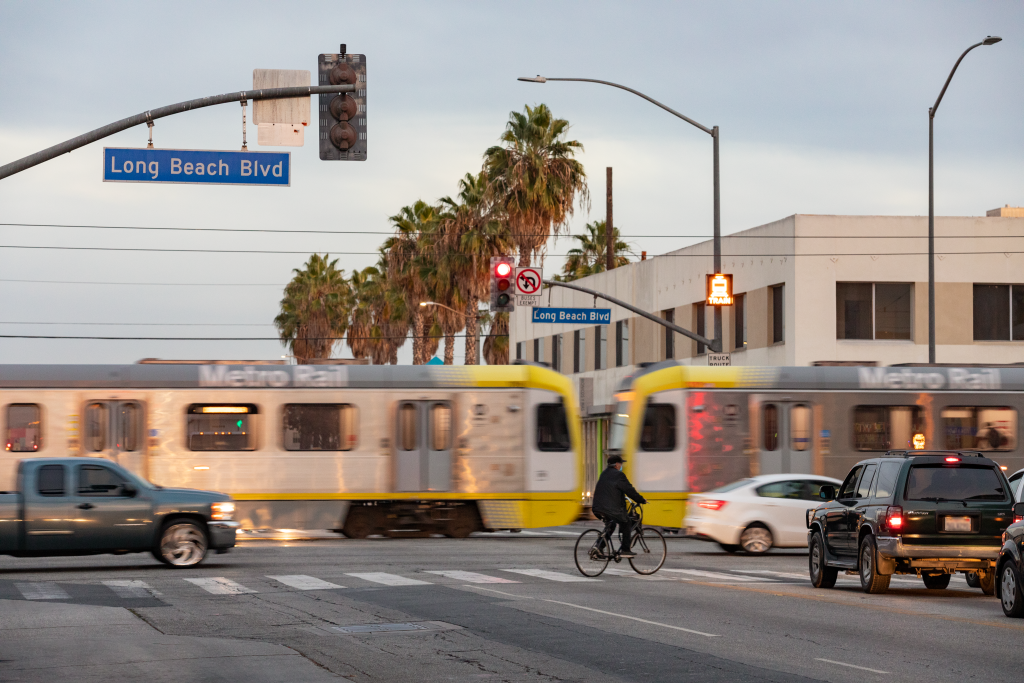
What are transit-oriented communities?
Transit-oriented communities (TOCs) are places that, by their design, make it more convenient to take transit, walk, bike or roll than to drive.
- Where Metro leads: Metro is responsible for planning, designing, building and operating transit service in LA County. Metro seeks to leverage infrastructure investments and assets for community development and transformation.
- Where Metro partners: Metro partners with local jurisdictions, community groups, faith and labor organizations, and the private sector to encourage and incentivize policies that improve the quality of life.
What is Metro’s Transit Oriented Communities Policy?
- Increase transit ridership and choice
- Stabilize and strengthen communities around transit
- Engage communities and partners in visioning
- Distribute transit benefits to all
- Capture value created by transit
How is Metro approaching transit-oriented communities?
Metro’s Transit Oriented Communities program focuses on finding and strengthening synergies between transit and the surrounding streets, public spaces and developments to support an expanding transit network.
Metro partners with developers, stakeholders and local jurisdictions to envision, design and build development projects on Metro-owned properties. Joint development projects are vetted through a competitive bid or Unsolicited Proposals process with extensive community input. The program also seeks to build community benefits like affordable housing that can otherwise be difficult to deliver.
Metro has a plan to create a safe and pleasant environment for accessing transit, with the aim of increasing transit ridership. This will be achieved by facilitating commercial revitalization, stimulating private investment, and generating commerce that leads to sales tax benefits.
Transit Supportive Planning
Metro supports local jurisdictions in developing and adopting transit-supportive policies and programs to leverage the value of transit investments and increase ridership.
This work includes:
- Developing best practice guides and resources, such as the Transit Supportive Toolkit and Metro Transfers Design Guide.
- Enacting the TOC Implementation Plan which includes providing grant writing assistance and technical assistance for community development and land use planning.
- Leading extensive redevelopment activities in and around Los Angeles Union Station.
Metro coordinates with adjacent property owners and developers through the Adjacent Development Review team to ensure safe construction and strengthen connections to transit.
